





Easy monitoring starts here
Professionals can connect new spaces to monitoring software receivers with just a few steps in apps. Moreover, system users can send monitoring requests directly from their app by choosing the provider from the list of available companies to connect to.
Cloud Signaling ensures accurate event delivery by enabling customization of default alarm and event codes. This helps align system events with the specific requirements of monitoring software.
The application users can control which events a monitoring software receives from an Ajax system. For example, outdoor intrusion, fire, or leak alarms can be filtered out if a monitoring company does not provide a response service for such events.
Why Cloud Signaling?
In-app panic button
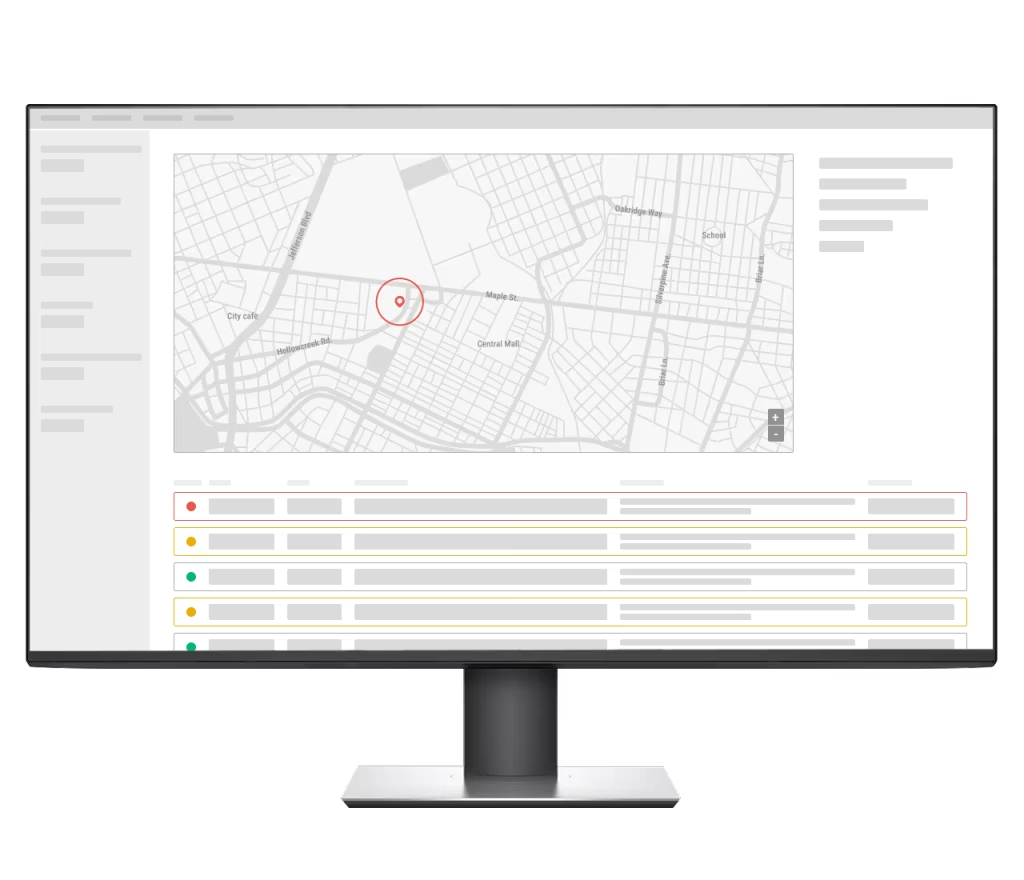
When the panic button is activated in an app, monitoring software receives not only the event code but also the exact coordinates of the client’s smartphone. Location data enables operators to dispatch the RRU to the client. This feature extends protection beyond the premises: companies can expand security services by offering personal safety packages.
Additional security service
Instant geolocation transmission in case of a panic event
Assistance in off-site emergency situations
Effortless integration
No need to set up servers, configure ports, or purchase additional equipment. Everything works the moment the application is installed.
More than alarm transmission
The monitoring software can receive not only alarms and events but also photo verification of alarms, camera images, and the panic button’s coordinates.
Global protocol compatibility
Supports SIA DC-09 (ADM-CID), the industry standard for monitoring software worldwide, and other popular protocols. Enables effortless integration with most CMS platforms.
Over the past decade, the physical security landscape has evolved significantly—from manual, paper-based, and reactive practices to a technology-driven, proactive approach. With this transformation, the need for a centralized management platform capable of overseeing both operational and strategic security objectives has become essential.
How alarms and events reach the monitoring software
Cloud Signaling enables communication between systems and third-party monitoring software. It receives encrypted notifications from devices, decrypts them, and converts the data into a protocol format compatible with monitoring platforms.
Events are delivered directly from Cloud, eliminating the need to install additional utilities or host local infrastructure. The setup is managed entirely through the application. Once Cloud Signaling is activated, the transmission process works stably.
Cloud Signaling supports the transmission of system events, alarms, photos, camera snapshots, and GPS coordinates from the in-app panic button. It also allows configuration of polling intervals to meet specific monitoring station or certification requirements.
Communication via Cloud
Adjustable polling intervals
Physical Security Management encompasses a range of key objectives, including:
- Alarm and Event Monitoring: Managing the complete lifecycle of events—from initial receipt and dispatch to resolution—across diverse technologies.
- Guarding Operations: Overseeing structured incident and occurrence reporting while ensuring adherence to Standard Operating Procedures (SOPs) and Service Level Agreements (SLAs).
- Compliance and Remediation: Enabling comprehensive reporting and the proactive management of non-conformances.
The CiiMS Application delivers a unified, configurable platform designed to effectively manage these objectives. With flexibility at its core, CiiMS enables organizations across industries—whether focused on Security & Risk, Mining, Estates, or Banking—to structure, monitor, and enhance their physical security management processes with precision and efficiency.
Visual verification from cameras
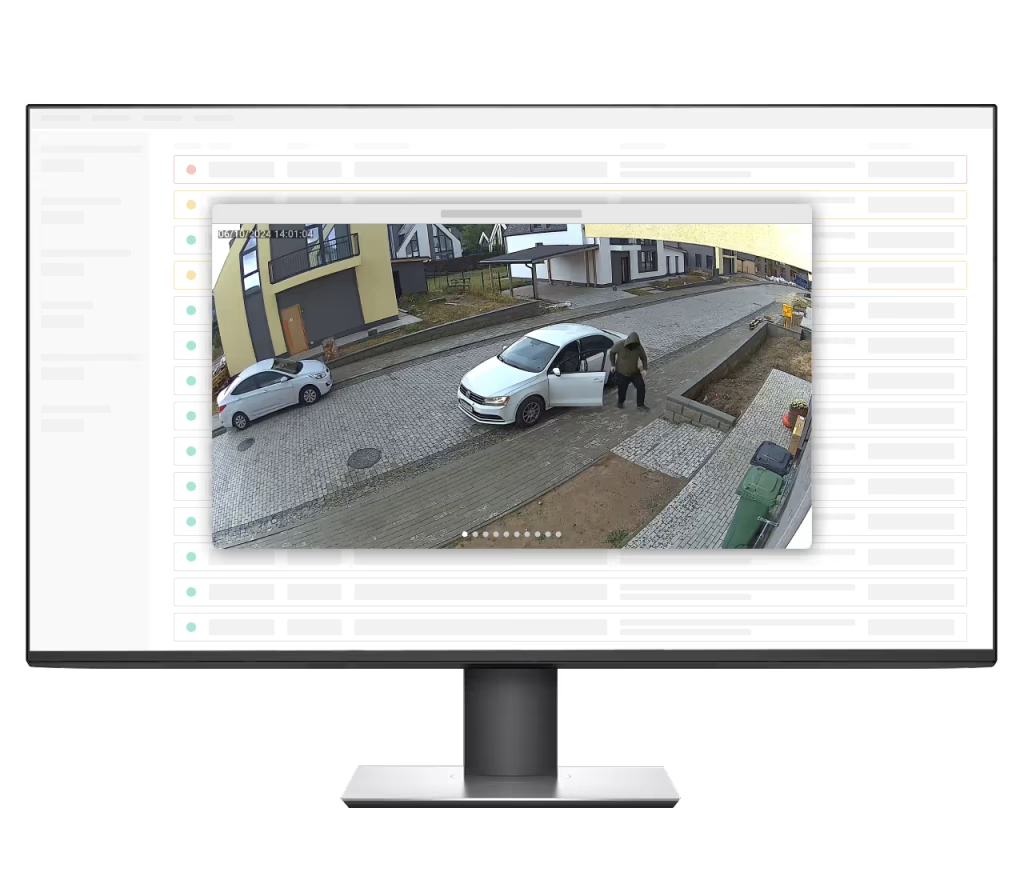
The video devices strengthen intrusion protection by adding visual context to alarms. They can respond to alarms triggered by any device in the system or operate independently using built-in motion detection and AI recognition.
In addition, the service enables transmission of a series of photos to the monitoring software when the video devices detect motion or recognize objects. This reduces false alarms, avoids unnecessary dispatches, and allows detection of threats before an intrusion system activates an alarm.
Visual verification of alarms triggered by system devices
Visual verification of detected motion2 from video surveillance devices